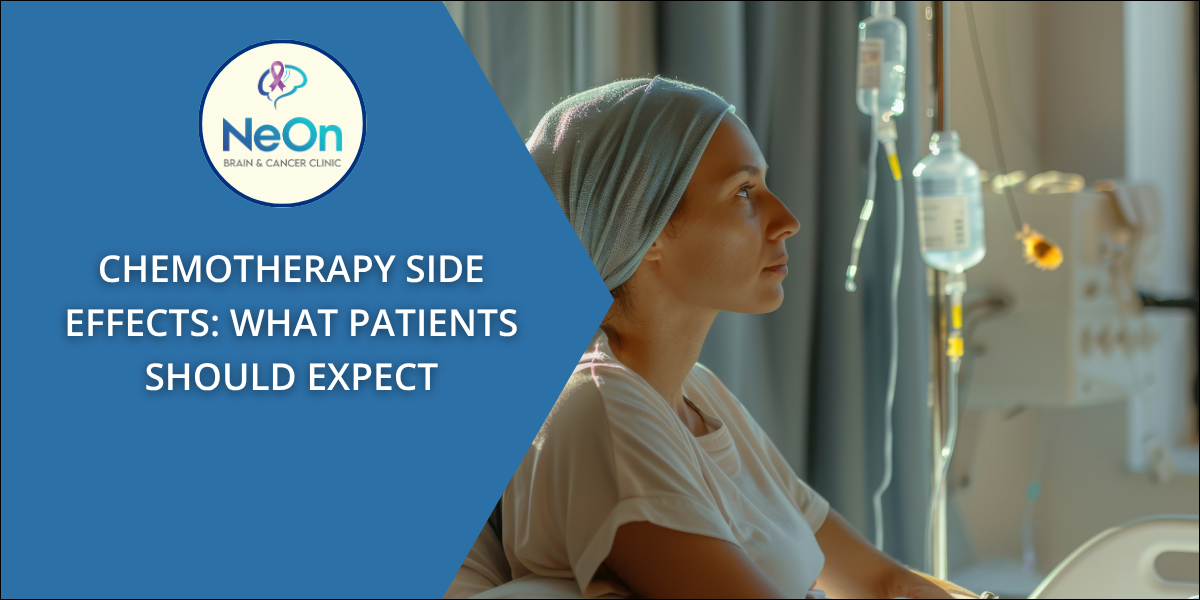
Starting chemotherapy can feel overwhelming, and one of the first questions most patients ask is: How will it make me feel? The honest answer is that chemotherapy side effects differ from person to person. They depend on the drugs used, the dose, the schedule, the type of cancer and your overall health. Some people have only mild symptoms, while others need more support.
Knowing what to expect helps you prepare and speak up early.
Why Does Chemotherapy Cause Side Effects?
Chemotherapy medicines target cells that grow and divide quickly, which is how cancer cells behave. Some healthy cells also divide quickly, including cells in:
- Hair follicles, which is why hair thinning or loss can occur
- The lining of the mouth and gut, which can lead to mouth sores, nausea or bowel changes
- The bone marrow, where blood cells are made, which can lower blood counts
Healthy cells usually recover, and many side effects ease after treatment ends. Your oncologist plans your chemotherapy treatment in Hadapsar, Pune with this balance in mind: treating the cancer while keeping side effects manageable.
Common Chemotherapy Side Effects
Not everyone gets every side effect below. Your doctor can tell you which are likely with your treatment.
Fatigue
Fatigue is one of the most common side effects. It is more than ordinary tiredness and may not fully improve with sleep. It can help to:
- Plan important tasks for the times you feel strongest
- Take short rests rather than long naps
- Stay gently active, such as a short walk, if your doctor agrees
Nausea and Vomiting
Nausea is often well controlled today. Your doctor may prescribe anti-nausea medicines to take around each session. Take them exactly as advised, even if you feel fine, because preventing nausea is easier than treating it. Small, frequent meals and avoiding strong smells also help.
Hair Loss
Some chemotherapy drugs cause hair thinning or hair loss, while others do not. When it happens, it usually begins a few weeks into treatment, and in most cases hair grows back after treatment ends.
Increased Risk of Infection
Chemotherapy can lower your white blood cell count, which reduces your ability to fight infection. Your team will check your blood regularly. To lower your risk:
- Wash your hands often, especially before eating
- Avoid close contact with people who have a cold, flu or fever
- Eat freshly cooked food and follow good food hygiene
Mouth Sores and Taste Changes
Mouth ulcers, a dry mouth or a metallic taste can occur. Use a soft toothbrush, rinse your mouth as advised and avoid very spicy, sour or hot foods while your mouth is sore.
Appetite and Digestive Changes
Taste changes, nausea and tiredness can reduce appetite. Some people also have diarrhoea or constipation. Tell your team about any change in bowel habits, as medicines and diet changes can help.
Tingling or Numbness in the Hands and Feet
Certain drugs can affect the nerves, causing tingling, numbness or burning in the fingers and toes. This is called peripheral neuropathy. Report it early, as your doctor may adjust your treatment. If it persists, an assessment for nerve problems such as neuropathy by a neurologist can be useful.
Emotional Changes
Feeling anxious or low during treatment is common. Talking openly with your doctor, family or a counsellor helps.
How Long Do Side Effects Last?
Most side effects are temporary. Nausea often settles within a few days after a session, while fatigue and hair loss can last for weeks or months. Blood counts usually recover between cycles, which is one reason chemotherapy is given with rest periods. A few effects can last longer or appear later, depending on the drugs used, so your oncologist will arrange regular follow-up.
When Should You Call Your Doctor Right Away?
Contact your cancer care team or seek urgent care if you have:
- A fever of 100.4°F (38°C) or higher, or any temperature your team has asked you to watch for
- Chills, shivering or feeling suddenly very unwell
- Breathlessness or chest pain
- Vomiting or diarrhoea that does not stop, or you cannot keep fluids down
- Unusual bleeding or bruising
- Pain, redness or swelling around an IV line or port
It is better to call early than to wait.
Practical Tips to Cope During Chemotherapy
- Keep a symptom diary so follow-up visits are more useful
- Stay hydrated unless your doctor has advised a fluid limit
- Check before taking anything new, as some herbal products and supplements can interact with chemotherapy
- Bring someone with you to appointments to help remember advice
Depending on your cancer, your oncologist may also discuss targeted therapy for cancer or immunotherapy, alone or alongside chemotherapy. Each has its own possible side effects.
Frequently Asked Questions About Chemotherapy Side Effects
Does everyone get side effects from chemotherapy?
No. Some people have very few side effects, while others have more. It depends on the drugs, dose, schedule and your general health.
Is chemotherapy painful?
Receiving chemotherapy is usually not painful, apart from the small prick when an IV line is placed. Some side effects, such as mouth sores, can cause discomfort, and your care team can help manage them.
Will my hair definitely fall out?
Not always. Only some chemotherapy drugs cause hair loss, and hair usually grows back after treatment ends.
How can I reduce nausea during chemotherapy?
Take anti-nausea medicines as prescribed, eat small meals and sip fluids slowly. Tell your doctor if nausea is not controlled, as other medicines may help.
Can I work during chemotherapy?
Many people keep working, sometimes with reduced hours. It depends on your energy levels, job and treatment schedule.
Do chemotherapy side effects go away after treatment?
Most improve gradually after treatment ends. A few may take longer to settle, which is why follow-up visits matter.
Talk to a Cancer Specialist About Your Treatment
If you or a family member is starting chemotherapy or struggling with side effects, an oncologist can help.
At Neon Brain & Cancer Clinic, cancer care is led by Dr. Asma Pathan, a medical oncologist with over 10 years of experience. She completed her MBBS and MD in General Medicine at the Karnataka Institute of Medical Sciences, Hubli, and her DNB in Medical Oncology at Omega Hospital, Hyderabad. Her work includes chemotherapy, targeted therapy, immunotherapy, palliative care and supportive care. Neurology care at the clinic is led by Dr. Sadique Pathan, a neurologist with over 23 years of clinical experience.
Clinic locations in Pune:
- Hadapsar: 403, Parakh Capital, Beside Ram Manohar Lohiya Garden, Samrat Garden Road, Hadapsar, Pune 411028
- Kharadi: Cherry Life Ganga Altus, OPD No. 1, 1st Floor, Tower F, Kharadi, Pune 411014
- Shastri Nagar, Yerwada: Nagar Road, near Hermes Heritage, Hermes Heritage Society Phase 1, Shastrinagar, Yerwada, Pune 411006
Call +91 75584 43457 or book a consultation through our contact page to discuss your treatment plan and how side effects can be managed.