
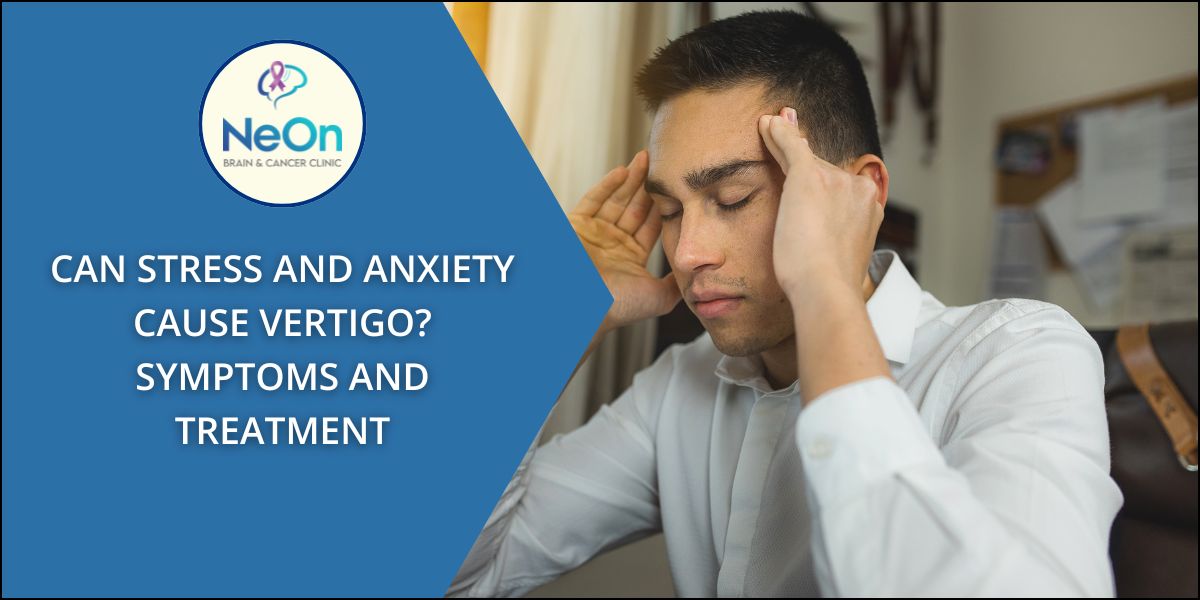
Feeling like the room is spinning, losing your balance, or experiencing sudden dizziness can be frightening. Many people assume these symptoms are always caused by an inner ear problem, but stress and anxiety can also play a significant role in triggering or worsening vertigo. While stress itself may not directly cause every type of vertigo, it can increase the frequency and intensity of dizziness episodes in many individuals.
What is Vertigo?
Vertigo is not a disease but a symptom that creates the sensation that you or your surroundings are spinning or moving when there is no actual movement. Unlike ordinary dizziness, vertigo often affects balance and may interfere with walking, driving, or performing daily activities.
Vertigo commonly occurs due to:
- Benign Paroxysmal Positional Vertigo (BPPV)
- Inner ear infections (Vestibular Neuritis or Labyrinthitis)
- Meniere’s Disease
- Vestibular Migraine
- Stroke or neurological disorders
- Anxiety and chronic stress
A proper neurological evaluation helps determine whether vertigo originates from the inner ear, brain, or another medical condition.
Can Stress and Anxiety Cause Vertigo?
Yes. Stress and anxiety can contribute to vertigo in several ways.
When you’re under constant stress, your body releases hormones such as cortisol and adrenaline. These hormones prepare your body for a “fight or flight” response, increasing heart rate, breathing rate, and muscle tension. Prolonged activation of this stress response can affect the nervous system and balance mechanisms.
Stress may:
- Increase sensitivity of the vestibular (balance) system
- Trigger vestibular migraine attacks
- Cause hyperventilation, leading to dizziness
- Increase muscle tension in the neck, affecting balance perception
- Worsen existing vertigo disorders
- Lead to panic attacks that mimic vertigo symptoms
People with chronic anxiety often describe feeling lightheaded, unsteady, or as though they are floating. These symptoms can overlap with true vertigo, making professional evaluation extremely important.
Symptoms of Stress-Related Vertigo
Stress-induced vertigo may present with:
- A spinning sensation
- Feeling off-balance
- Lightheadedness
- Motion sensitivity
- Difficulty concentrating
- Nausea
- Headache
- Neck tightness
- Ringing in the ears (occasionally)
- Increased symptoms during stressful situations
Some patients notice symptoms before work presentations, during emotional stress, after sleep deprivation, or during periods of prolonged anxiety.
When Should You See a Neurologist?
Occasional dizziness may not always be serious, but frequent or severe vertigo requires medical evaluation.
Consult a neurologist immediately if you experience:
- Vertigo lasting several hours
- Recurrent episodes
- Difficulty walking
- Double vision
- Slurred speech
- Weakness or numbness
- Severe headache
- Hearing loss
- Loss of consciousness
These symptoms may indicate neurological conditions requiring urgent treatment.
Tips to Prevent Stress-Related Vertigo
You can reduce the risk of vertigo episodes by:
- Managing stress effectively
- Following a consistent sleep schedule
- Staying hydrated
- Exercising regularly
- Avoiding sudden head movements
- Limiting caffeine and alcohol
- Practicing relaxation techniques
- Taking medications exactly as prescribed
- Attending regular neurological follow-ups
Frequently Asked Questions
1. Can anxiety alone cause vertigo?
Yes. Anxiety can trigger dizziness and may worsen existing vertigo conditions by affecting the body’s balance system and increasing stress hormones.
2. How long does stress-related vertigo last?
It varies. Some episodes last only a few minutes, while others may continue for hours or recur over several days depending on stress levels and the underlying cause.
3. Can vertigo go away without treatment?
Some mild cases improve naturally, but recurrent or severe vertigo should always be evaluated by a neurologist to rule out serious neurological conditions.
4. What foods should I avoid if I have vertigo?
Reducing caffeine, alcohol, excessive salt, and processed foods may help some patients, especially those with Meniere’s disease or vestibular migraine.
Book Your Vertigo Consultation Today
Persistent dizziness should never be ignored. Early diagnosis can help prevent complications and improve your quality of life.
If you or your loved one experiences frequent vertigo, dizziness, balance problems, or neurological symptoms, schedule a consultation with Dr. Sadique Pathan at Neon Brain & Cancer Clinic, Hadapsar. With expert neurological assessment, advanced diagnostics, and personalized treatment, you can receive the care needed to regain confidence and stability.
Call: +91 75584 43457.
Visit –https://neonclinics.com/